Neeraj Chopra and the Rise of Indian Athletics on the Global Stage
August 7, 2021, Tokyo. A javelin lands at 87.58 me

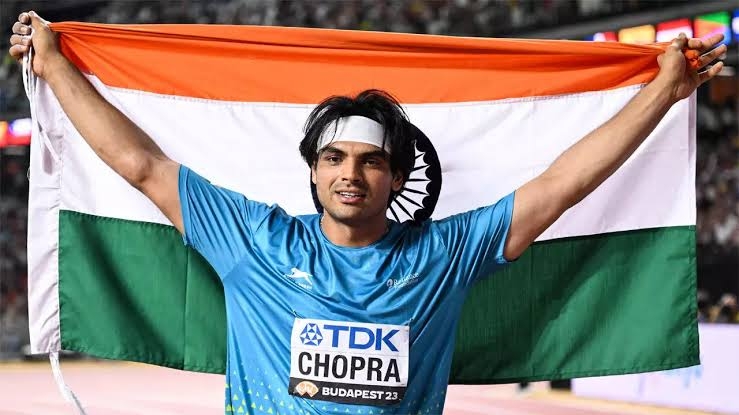
August 7, 2021, Tokyo. A javelin lands at 87.58 meters and India's hundred-plus-year wait for a track and field Olympic gold is just... over. Not counting Norman Pritchard's silvers from 1900 — most people don't, since he competed under murky circumstances that historians still argue about. So really, this was the first one. Ever.
The guy who threw it was 23. Farming family, zero athletic pedigree, from a village called Khandra outside Panipat in Haryana. He started throwing a javelin at eleven because his parents wanted him to lose weight. That's genuinely how it began — not some scripted origin story tacked on later by a marketing team.
Neeraj Chopra is the name. And if you've watched Indian sport at all since then, you've heard it a hundred times, easily.
Quick tangent before the medal count: if you like following athletics closely enough to know who's peaking before a championship and who isn't, you might also enjoy watching how betting markets move around these meets. dbbet usually has javelin and athletics odds up for the bigger events — worth a glance if that's the kind of following you're into.
So. What's actually happened since Tokyo?
The Streak Nobody Talks About Enough
Here's a number that gets buried under the medal talk: 26. That's how many tournaments in a row — June 2021 through September 2025 — Chopra finished either first or second. Second-longest streak like that in javelin history, behind Jan Železný, and Železný's the actual world record holder, so that's the company being discussed here. Before that streak even started, he'd already medaled in 33 straight events. Four years without a genuinely bad outing. Try that in any sport, individual or team.
None of it happened by accident, either. Chopra came up through a string of coaches — Jaiveer Singh first, back in 2010, then Naseem Ahmed for several years, briefly Kashinath Naik, then Gary Calvert and later the German biomechanics specialist Klaus Bartonietz, who worked with him through Tokyo. Each one added something. By the time he reached his mid-20s, the technical side of his throw had been rebuilt more than once.
Along the way, the results kept stacking:
- Silver at Eugene 2022 (India's first Worlds medal in athletics since long jumper Anju Bobby George's bronze back in 2003)
- Gold at Budapest 2023 — 88.17m, first Indian world champion in the sport, ever, beating Arshad Nadeem and Jakub Vadlejch to it
- Diamond League Final title in Zurich, 2022, another first for an Indian athlete
- Commonwealth gold in 2018 at Gold Coast
- Asian Games gold twice over, 2018 and again 2023 in Hangzhou
Ninety Meters, and Paris Going Wrong
There's a number in javelin that separates good from legendary: 90 meters. Chopra sat at 89.94, his Stockholm 2022 best, for what felt like forever. Close enough that it started to feel almost annoying, both for him and for everyone watching.
Then Paris 2024. He threw 89.45 in the final — a mark that wins most Olympic finals in history, easily. Except Arshad Nadeem, throwing for Pakistan that day, put up 92.97, an Olympic record, and Chopra took silver instead. Two straight Olympic medals in the same individual event is rare air for any Indian athlete; he's one of only a handful who's ever managed back-to-back podiums like that. Still, it clearly didn't feel like enough at the time.
Three months later he hired Jan Železný as his coach. The record holder himself, the guy whose consecutive-finishes streak he'd been chasing for years without quite matching it. Then in May 2025, Doha Diamond League: 90.23 meters. National record. He finished second that day anyway — Germany's Julian Weber threw 91.06 — but nobody really remembers the placing from that meet. They remember the number.
More Than His Own Results at This Point
Athletics in India has always played second fiddle to cricket. Badly funded, rarely covered outside the Olympics or Worlds, treated for decades like a footnote sport. Chopra's shifted that some, and not by accident — he's one of the public faces of the Target Olympic Podium Scheme, the government funding setup that got him a German coach and a proper European competition circuit years before other Indian throwers had access to anything close to that kind of backing. Younger athletes coming up now point to his career path as the template.
Awards kept arriving alongside all of it.
- Arjuna Award back in 2018
- Khel Ratna in 2021 (India's top sporting honor)
- Padma Shri in 2022
- Commission in the Indian Army
- Honorary lieutenant colonel in October 2025
- Married former tennis player and coach Himani Mor in 2025
None of that changes a single throw on the runway, but it shows how far past "just an athlete" he's moved within India's public life — closer to a genuine cultural fixture at this point.
The Wider Ripple Effect
It's not only about Chopra anymore, either. Other Indian athletes have started pushing into spaces the country rarely competed in seriously — distance runners like Parul Chaudhary and Avinash Sable picking up national records and international results of their own, badminton and hockey riding their own separate waves of attention. Chopra didn't cause all of that single-handedly, but he's routinely cited as the reason athletics specifically stopped feeling like the sport nobody in India watched between Olympics. Sponsors noticed too — he's fronted campaigns for brands well outside sport, the kind of endorsement attention Indian track and field athletes almost never got before him.
Still Going
He's 28 now, still finishing near the very top — second again at the 2025 Diamond League final, still one of maybe three or four throwers alive who can realistically win any javelin competition he enters on a given day. Los Angeles 2028 is out there. So is another crack at pushing past 90.23, a number he's clearly not done chasing.
But the bigger shift already happened, regardless of what comes next. Kids in villages exactly like Khandra now have someone concrete to point to. Proof that Indian sport isn't only cricket, and that one javelin, thrown far enough, really can move how an entire country sees itself.