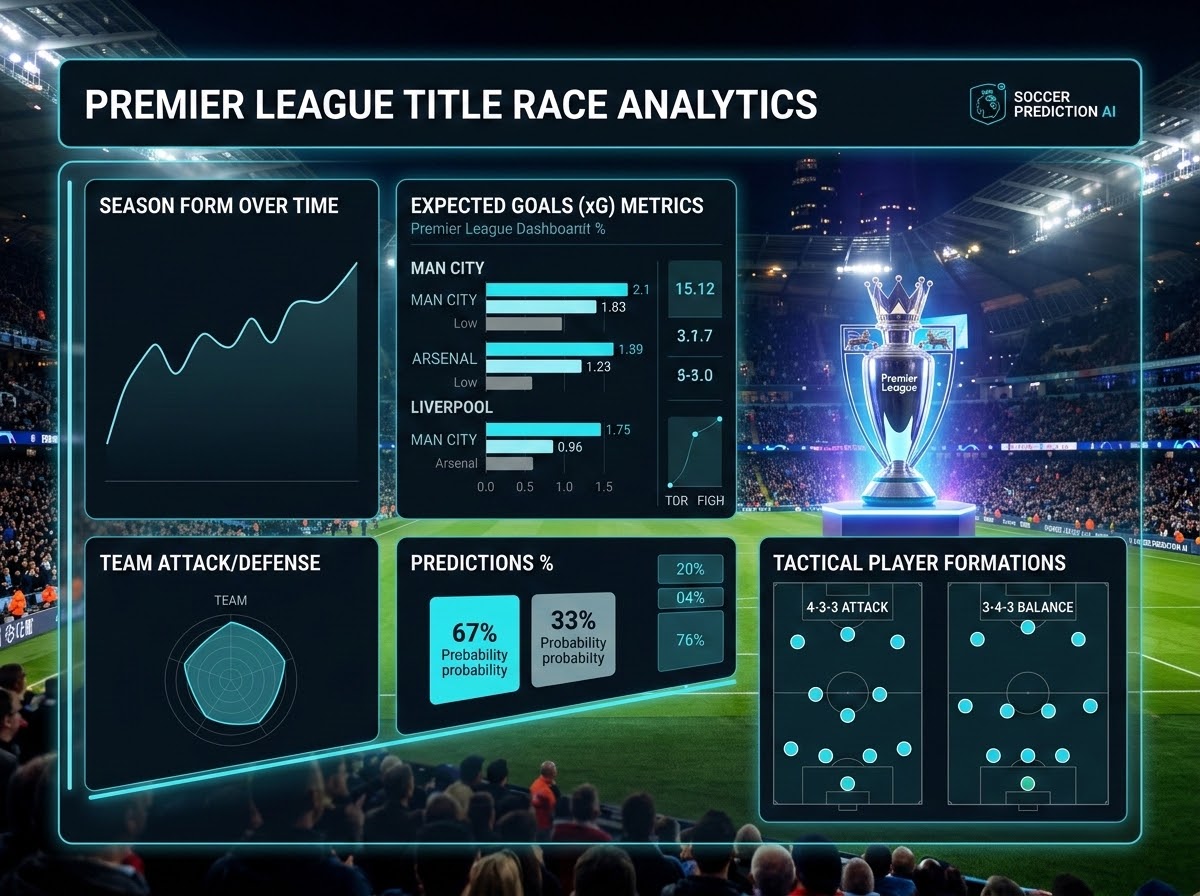
Expected Goals Today: How xG Data Improves Your Daily Football Predictions
Expected goals data is now widely available for vi

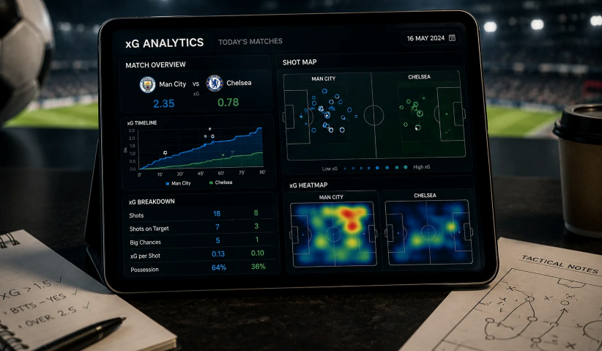
Expected goals data is now widely available for virtually every major professional football league, and using it as part of a daily prediction process gives a meaningful advantage over relying solely on goals scored, form table positions, and traditional pre-match statistics. The application of xG to today's football predictions is not about complex modeling but about identifying specific situations where a team's current goal-scoring or conceding record is misleading because of underlying performance data that tells a different story.
The most practical daily application of xG is identifying teams that are either significantly over or underperforming their expected goals totals. A team scoring more goals than their xG would predict is benefiting from unusually high finishing efficiency, often in the form of a striker in an exceptional short-term form streak or a goalkeeper who has performed below average on shots faced. Both situations involve performance at levels that are statistically unsustainable over a full season, and identifying them before today's fixtures allows a more accurate assessment of the likely match outcome.
For daily xG-informed Football Predictions, platforms like site incorporate expected goals context into Free Football Predictions for today's matches. This combination of traditional form analysis with underlying performance quality data gives a more complete and more accurate probability assessment than either source alone.
Identifying Overperforming Teams Before Today's Match
The clearest xG signal to watch before any match is a significant gap between goals scored and expected goals for. If a team has scored sixteen goals in eight matches but their xG total for that period is only eleven, they are finishing at almost fifty percent above their expected rate. This gap typically corrects over time, meaning future matches are more likely to see this team underperform relative to their recent goal-scoring reputation.

When Is Overperformance Genuine Versus Lucky
There are genuine cases where a team outperforms xG sustainably. A team with an elite finisher whose technical quality and decision-making consistently converts lower-probability chances at a higher rate than average will sustainably outperform basic xG models. Similarly, a goalkeeper whose exceptional reflexes and positioning reduces opponents' scoring from expected levels will suppress their team's xGA beyond what reversion to the mean would predict. Identifying whether an xG gap reflects genuine quality or unsustainable variance requires contextual knowledge that pure statistical analysis cannot always provide.
Defensive xGA and What It Means for Today
A team whose xGA is significantly higher than their actual goals conceded has been benefiting from either exceptional goalkeeping or fortunate defensive moments that reduced scoring below what the quality of chances faced would normally produce. When facing today's opponents, the true probability of that team conceding may be considerably higher than their clean sheet record suggests. This insight is directly applicable to both match winner and goals market decisions.
Applying xG to Today's Goals Markets
The over and under goals markets are the most directly xG-relevant betting options for today's fixtures. A match between two teams with high xG-for and high xG-against rates is a structural over goals candidate regardless of whether their recent results have been high-scoring. A match between two teams with low xG-for rates is a structural under candidate even if one or both sides has recently scored in some matches due to fortunate finishing.

Combining xG With Lineup Information
xG data becomes more actionable when it is combined with today's confirmed lineup information. A team's xG is built on the assumption that their regular players are available. If today's lineup is significantly weakened due to injuries or rotation, the expected goals performance level will be lower than the seasonal average suggests. Adjusting xG-based probability assessments downward when the lineup is confirmed as weakened prevents overstating the goal probability for either market side.
Conclusion
Expected goals data improves daily football predictions by replacing the potentially misleading signal of actual goal totals with a more reliable measure of underlying performance quality. Identifying overperforming and underperforming teams before today's fixtures gives a probability advantage that traditional form analysis misses, and combining xG context with confirmed lineup information produces the most complete same-day analytical framework available to modern football bettors.